
From Cash to Code: How QR Payments Are Fast-Tracking Bangladesh’s Digital Economy
প্রকাশ: রবিবার, ১৫ ফেব্রুয়ারি, ২০২৬ টেকভয়েস২৪ ডেস্ক
ছবি:
সংগৃহীত
Bangladesh is increasingly embracing digital payments and QR codes are becoming one of the most visible symbols of this shift. From market stalls in Dhaka to retail outlets in district towns, QR-based payment acceptance is transforming how consumers and merchants transact, helping drive the country toward a more connected and inclusive financial system. The overall digital payment ecosystem in Bangladesh continues to expand. In 2024, Mobile Financial Services (MFS) transactions which also include QR payments reached Tk 17.37 trillion, amounting to nearly 50% of GDP and highlighting the scale of digital finance adoption nationwide. Though cash remains dominant, accounting for about 72% of all transactions in value terms in December 2024 the share of digital transactions is steadily growing.
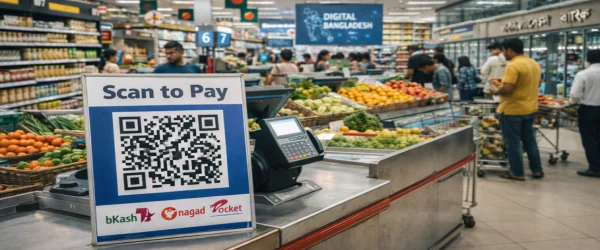
QR codes offer a simple and cost-effective way for merchants to accept payments digitally without expensive hardware. Under the central bank’s Bangla QR initiative, a unified QR standard enables customers to scan code with any bank app or mobile wallet and complete payments instantly. This interoperability is critical for scaling digital adoption. The total number of registered MFS accounts has now reached 146.46 million, including 69.87 million urban accounts and 76.60 million rural accounts. This urban–rural distribution highlights that digital finance is no longer confined to cities; it is expanding deep into rural Bangladesh.
Platforms such as bKash, Nagad, Rocket, and UPay continue to dominate the market, underscoring the steady growth of digital transactions across both urban and rural areas. What began primarily as person-to-person money transfers has evolved into a broader retail payment ecosystem, where customers can now scan a QR code and complete transactions instantly.
Merchant acceptance of QR payments is gradually increasing, specifically in urban and semi-urban areas. Thousands of street vendors, grocery stores, pharmacies, and small businesses now display QR codes at their counters, enabling shoppers to pay with mobile wallets or bank apps with a quick scan. Industry reports estimate that nearly 700,000 merchants now accept QR-based payments across the country. QR code adoption lowers barriers for small and micro enterprises, which previously could not afford traditional POS devices. This inclusion helps digitize economic activity at the grassroots level and creates digital transaction records that can eventually support access to credit and formal financial services.
Despite strong growth signals, QR payments face adoption challenges. Many consumers and merchants still prefer cash partly due to habits, limited digital literacy, and trust issues. In 2025, cash-based transactions continued to account for most payments in value terms.
Moreover, QR adoption varies widely across demographics, with rural areas, women, and lower-income groups less likely to use digital payments than their urban counterparts. Analysts point to factors like data costs, limited smartphone penetration, and usability barriers as restraints on regular use.
Why QR Matters for Bangladesh
Financial Inclusion:
QR payments bring digital finance to small merchants who were previously outside the formal financial system. With simple printed QR code linked to a mobile wallet, even micro-entrepreneurs in rural markets can accept digital payments, helping integrate informal businesses into the formal economy.
Cost Efficiency:
Businesses avoid the high costs associated with traditional POS machines, while customers benefit from fast, contactless, and convenient transactions. Lower operational costs make QR particularly attractive for small and medium enterprises (SMEs).
Economic Transparency:
Digital transaction records help reduce financial leakages, improve accountability, and create reliable financial histories. These records can support access to formal lending, credit scoring, and data-driven financial services, strengthening the overall financial ecosystem.
Cashless Society:
QR adoption supports Bangladesh’s gradual transition toward a cash-lite or cashless society. Reducing dependency on physical currency lowers printing and handling costs, enhances payment security, and modernizes the country’s transaction infrastructure. A stronger digital payment culture also improves resilience during crises when contactless systems become essential.
Alignment with Global Standards and Central Bank Roadmap:
The promotion of interoperable QR payments aligns with global digital payment trends and international best practices. Under the digital finance roadmap of Bangladesh Bank, the country aims to expand interoperability, strengthen cybersecurity frameworks, and deepen financial inclusion through technology-driven solutions. QR standardization initiatives such as Bangla QR reflect this commitment to building a modern, secure, and globally competitive payment ecosystem.
Bangladesh’s shift from cash to QR-based payments is a gradual but transformative process. Continued investment in infrastructure, coordinated awareness campaigns, and enhanced ease of use will be essential to accelerate adoption especially among underrepresented groups. The cashless journey is well underway, and QR codes are proving to be a pivotal technology in fast-tracking Bangladesh’s digital economy.
Writer: Dr. Md Sharif Hassan, Senior Lecturer, Taylor’s University, Malaysia